Tours to the world’s most mysterious ancient sites.
Göbekli Tepe, Puma Punku, Malta’s Hypogeum, Easter Island and more. Researcher-led expeditions, archaeology tours, day trips and tickets in one place. You always book directly with the operator.
Latest discoveries
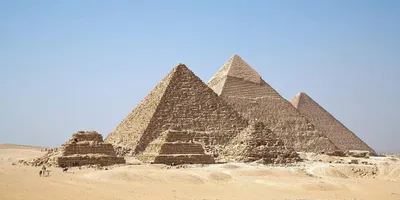
Photo: Bernard DUPONT · CC BY-SA 2.0
6 Nov 2026 · Lago Cobá and Cenote Xcach, Yucatán Peninsula, Mexico
Matthew Waters, Mark Brenner and colleagues dated sediment cores from two lakes beside ancient Maya settlements in the northern Yucatán. Mercury, linked to the Maya use of cinnabar (red pigment) and elemental mercury, exceeded modern sediment toxicity thresholds for centuries between about 40 and 820 CE, peaking around 720 CE at Cenote Xcach. In the same layers, markers for algae, cyanobacteria, ostracods, snails and midge larvae declined or vanished, and recovered when mercury fell.
Jianbo Guo, Ruochen Ge, Lu Yang and colleagues studied textile residues on objects from the Sanxingdui sacrificial pits K2–K8, the site of the famous bronze heads and gold masks of the ancient Shu culture. They found silk on 101 objects, 94 of them bronzes, dating to the Late Shang period (1300–1046 BCE). Microscopy and infrared tests identify mulberry silk, mostly plain weave, some coloured with hematite or an organic red dye, and some cloths as finely woven as Shang silks from the Central Plains.
Kelly Graf, Ted Goebel and colleagues report on Shég’ Xdaltth’í’ (formerly McDonald Creek), 55 km south-southeast of Fairbanks. It has three Late Pleistocene occupation layers dated to about 13,800, 13,000 and 12,700 years ago. The oldest layer holds more than 80,000 specimens, including a distinctive hafted biface, bone and antler tools, animal remains and well-preserved activity areas.
Enrico Crema and colleagues used statistical models of radiocarbon and site data to track Jomon forager populations around the Kikai-Akahoya eruption about 7,300 years ago, one of the largest of the Holocene (VEI 7). They find a major population collapse in regions next to the volcano, but some nearby populations grew after the disaster, and some distant communities were hit by environmental effects that had been overlooked.
Kathleen Springer, Jeffrey Pigati, Jessica Tierney and colleagues expanded the excavations at White Sands and found 20 stratigraphic layers with human footprints in place, alongside megafauna trackways and drag lines made by travois. New radiocarbon dates on conifer pollen, combined with dates on aquatic seeds, put the footprint sequence between 23,500 and 21,700 years ago. Pollen, biomarker and sediment data record the lake turning into a playa during a dry spell that matches Dansgaard-Oeschger event 2, about 23,200 years ago.
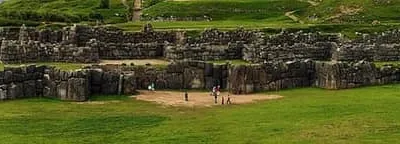
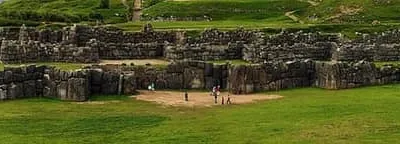
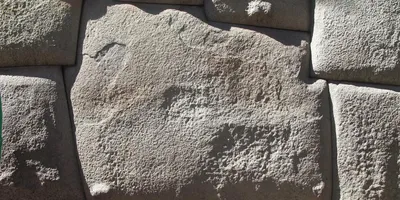
A Science news feature reports that Andean archaeologists are replacing the traditional Inca chronology (empire from 1438) with radiocarbon dates. At Saqsaywaman, dated charcoal suggests the site began to be remodelled with fitted masonry around 1400, with construction peaking from about 1418; the first results are in press at Antiquity.