The idea in brief
At sites from Egypt to the Andes, ancient builders cut, shaped and moved stone with a precision and on a scale that still impress modern engineers. Researchers such as Ben van Kerkwyk (UnchartedX), Brien Foerster and engineer Christopher Dunn argue that some of this work:
- has flatness, symmetry and right angles that would be very hard to achieve by hand;
- shows tool marks, such as spiral grooves in drill cores and saw cuts, that look like machining;
- involves blocks so massive that moving them would challenge modern cranes;
- is often found beneath, and older than, cruder masonry built on top.
From this they infer lost tools or technologies and, often, an older builder culture than the one archaeologists credit. That links this theory to the lost Ice Age civilisation hypothesis. Not everyone in this field goes that far. Many simply argue that the question of how has not been convincingly answered.
History of the idea
- Flinders Petrie (1883). The founder of scientific Egyptology surveyed Giza in The Pyramids and Temples of Gizeh. He was astonished by drill cores and saw cuts in granite and suggested the Egyptians used fixed jewel points, such as corundum or diamond, in their tools. His measurements are still quoted by both sides.
- Early 20th-century Peru. Visitors to Sacsayhuamán and Cusco widely reported legends that the Inca knew a plant that softened stone.
- Christopher Dunn, The Giza Power Plant (1998). A machinist, Dunn measured granite surfaces at Giza and the Serapeum. He argued their flatness and squareness implied machine tools.
- UnchartedX and the YouTube era (2010s–2020s). Ben van Kerkwyk’s field videos, alongside those of Brien Foerster, Matt Sibson (Ancient Architects) and others, brought high-resolution footage of tool marks to a mass audience. Podcast appearances brought the topic to millions.
Key evidence cited by proponents
- The Serapeum of Saqqara. An underground gallery holds about 24 granite and basalt boxes, each weighing up to roughly 70 tonnes with lids of up to 30 tonnes. They were placed in narrow side chambers. Proponents cite measured inside surfaces that are flat and square to within fractions of a millimetre. See the Abydos, Dendera & Serapeum guide.
- Predynastic stone vessels. Thousands of vases and bowls survive from before about 3000 BCE. They are made of diorite, basalt and even quartz crystal, some with narrow necks and hollowed interiors. In 2023–24 the Artifact Foundation, a group linked to UnchartedX, published 3D scans claiming symmetry and concentricity on the order of a few thousandths of an inch.
- Core drills and saw cuts. At Giza, tubular drill holes and cores in granite show spiral grooves that Petrie and Dunn interpreted as signs of very high feed rates.
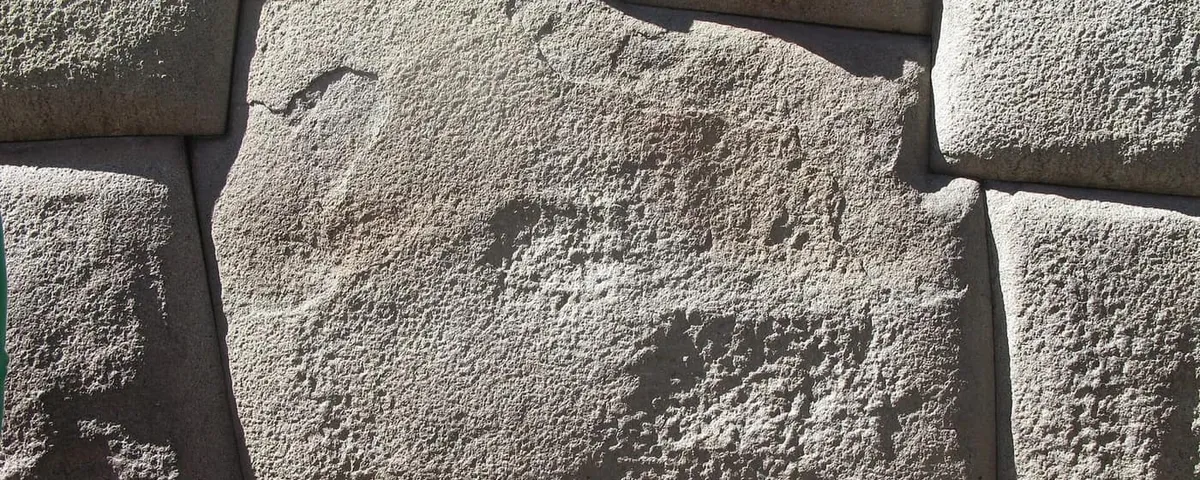
- Sacsayhuamán and Cusco. Polygonal andesite and limestone blocks weighing up to about 100–200 tonnes fit together without mortar, with many-angled joints such as the famous “12-angled stone” in Cusco.
- Puma Punku. Andesite and sandstone “H-blocks” have flat faces, inner right angles and drilled holes, and appear standardised.
- Ollantaytambo. The Wall of the Six Monoliths is made of rose rhyolite hauled from a quarry across the Urubamba river valley.
- Baalbek. The trilithon is three limestone blocks of about 800 tonnes each, lifted into a podium wall. Even larger blocks, up to an estimated 1,650 tonnes, remain in the nearby quarry.
- The Unfinished Obelisk at Aswan. It is an estimated 1,000+ tonnes, abandoned in the bedrock after cracking.
- Vitrified or “melted-looking” surfaces. These are claimed at some Andean sites and are often linked to stone-softening legends.
Who champions it
- Ben van Kerkwyk: measurement-driven field videos and vessel scanning.
- Brien Foerster: Peru, Bolivia and Egypt, and the idea of pre-Inca megalithic builders.
- Matt Sibson: engineering analysis of ancient sites.
- Jimmy Corsetti and Graham Hancock: wider popularisation.
- Kyle & Russ Allen: co-hosts of UnchartedX tours with special access to these sites.
The mainstream view, in fair depth
Archaeologists and experimental archaeologists accept that the work is extraordinary. They argue it can be explained by known methods, given time, skill and organisation.
- Experiments with copper and sand. In decades of experiments, Denys Stocks (Experiments in Egyptian Archaeology, 2003) drilled and sawed granite using copper tubes and blades fed with quartz-sand abrasive, which does the cutting. He reproduced the cores, grooves and cut marks found in Egypt, although slowly.
- Hammerstones and fitting at Sacsayhuamán and Ollantaytambo. Architect Jean-Pierre Protzen (Inca Architecture and Construction at Ollantaytambo, 1993) studied the quarries, the dragging ramps and blocks abandoned along the way, the “tired stones”. He showed that hard hammerstones could dress andesite, and that repeated trial fitting produces the interlocking joints. The Spanish chroniclers describe the Inca building these walls, with thousands of labourers.
- Organisation and logistics. The Wadi al-Jarf papyri, found in 2013, include the logbook of an inspector named Merer. It records boat crews shipping limestone from Tura to Giza during Khufu’s reign, which is direct documentary evidence of state-run pyramid construction.
- Dating the Serapeum. Excavated by Auguste Mariette in 1850–51, the Serapeum held burials of Apis bulls. The large boxes are dated to the Late Period (26th Dynasty and later). One carries an inscription of Amasis II, and another bears names of Cambyses II and Khabbash. To Egyptologists, inscriptions on the boxes date them, whatever the precision.
- Moving megaliths. Experiments and depictions, such as the tomb of Djehutihotep showing a colossus hauled on a sledge with water poured in front, show how large loads were moved. Roman engineering texts and the abandoned Baalbek quarry blocks show Roman methods in progress.
- Precision claims. Sceptics say some measurements are made with methods or on surfaces that exaggerate precision. They also note that skilled hand-lapping can achieve very flat surfaces. Independent, peer-reviewed metrology of the vessels has not yet been published.
Current state of research
This is one of the most testable areas of alternative history, and it is getting more data:
- Researchers in the alternative community are publishing raw 3D scans of predynastic vessels and selected temple surfaces, which in principle allows outside checking. Independent, peer-reviewed metrology of the highest-precision claims has still not appeared in the archaeological journals, so the numbers remain contested.
- Experimental archaeology keeps refining reconstructions of drilling and lathe-like turning. Denys Stocks’s copper-tube and sand-abrasive work remains the standard reference; later experimenters have made convincing stone vessels with hand tools and abrasives, though rarely matching the narrowest necks in the hardest stones at claimed production rates.
- New geological work on quarry sources, such as the rhyolite quarries for Ollantaytambo and Aswan granite, ties particular blocks to known quarries and tool marks, which undercuts ideas of unknown exotic stone sources.
- At Giza, muon imaging by the ScanPyramids collaboration (Nature, 2017) revealed a large void above the Grand Gallery. Later work announced a north-face corridor. These finds change the internal map of the pyramid; they do not, by themselves, identify the tools used to cut the stone.
- At Tiwanaku and Puma Punku, Alexei Vranich and colleagues published 3D reconstructions and print models (Heritage Science, 2018) that show how andesite and sandstone blocks could be assembled from standardised units. Proponents still argue that the cut quality exceeds what the reconstructions explain.
- Jean-Pierre Protzen’s field study of Ollantaytambo (Journal of Field Archaeology / University of Iowa Press, 1993) remains the mainstream baseline for Andean megalithic construction: quarries, “tired stones”, hammerstone dressing and trial fitting.
Open questions
- Will independent laboratories confirm or challenge the precision measured on predynastic vessels and Serapeum boxes?
- Exactly how were the Serapeum boxes moved into their chambers, and how long did it take?
- Do some Andean walls really predate the Inca? Dating masonry directly is notoriously hard.
- How much specialist knowledge was lost between periods, for example the decline of vessel-making after the Early Dynastic period?
- Can muon and other non-invasive imaging resolve whether hidden chambers or tool marks support a multi-phase building history at Giza?
Further reading & watching
- Christopher Dunn, The Giza Power Plant (1998) and Lost Technologies of Ancient Egypt (2010).
- Denys Stocks, Experiments in Egyptian Archaeology (2003).
- Jean-Pierre Protzen, Inca Architecture and Construction at Ollantaytambo (1993).
- Morishima et al., ScanPyramids void paper in Nature (2017).
- Vranich et al. on 3D reconstruction at Tiwanaku (Heritage Science, 2018).
- The UnchartedX YouTube channel; see Voices.
- See it in person: UnchartedX, Hidden Inca Tours and Megalithic Marvels tours in the directory.
Sources
- Petrie, W. M. F. (1883). The Pyramids and Temples of Gizeh (summary). https://en.wikipedia.org/wiki/Flinders_Petrie
- Stocks, D. A. (2003; Routledge ebook edition 2022). Experiments in Egyptian Archaeology: Stoneworking Technology in Ancient Egypt. Routledge. https://doi.org/10.4324/9781003269922
- Protzen, J.-P. (1993). Inca Architecture and Construction at Ollantaytambo. University of Iowa Press. (See also Journal of Field Archaeology review trail.) https://doi.org/10.2307/530341
- Diary of Merer / Wadi al-Jarf papyri (Wikipedia, with references). https://en.wikipedia.org/wiki/Diary_of_Merer
- Serapeum of Saqqara (Wikipedia, with references). https://en.wikipedia.org/wiki/Serapeum_of_Saqqara
- Baalbek (Wikipedia, with references to DAI quarry work). https://en.wikipedia.org/wiki/Baalbek
- Morishima, K. et al. (2017). Discovery of a big void in Khufu’s Pyramid by observation of cosmic-ray muons. Nature. https://doi.org/10.1038/nature24647
- Vranich, A. et al. (2018). Reconstructing ancient architecture at Tiwanaku, Bolivia: the potential and promise of 3D printing. Heritage Science. https://doi.org/10.1186/s40494-018-0231-0
- UnchartedX. https://unchartedx.com/
- ScanPyramids project (Wikipedia). https://en.wikipedia.org/wiki/ScanPyramids
- Ollantaytambo (Wikipedia, with references). https://en.wikipedia.org/wiki/Ollantaytambo