The idea in brief
The ancient-astronaut theory holds that intelligent beings from elsewhere in the universe visited Earth in the distant past. In this view they influenced human culture, technology or even our biology, and the memory survives in myths of sky gods, in religious texts and in monuments. Its best-known advocates are Erich von Däniken and Giorgio A. Tsoukalos. History Channel’s Ancient Aliens has run since 2009 and is one of the most-watched documentary series in this field.
The theory comes in a soft and a strong form. The soft form says only that contact is possible and that some ancient puzzles are worth re-examining with that possibility in mind. The strong form says contact certainly happened: that visitors built or directed the building of famous monuments, gave humans writing, farming and astronomy, or even engineered our species. Most books and TV episodes move between the two, which is one reason the debate often goes in circles.
Supporters usually make three claims:
- Technology. Some ancient achievements, such as precise megaliths, huge blocks and astronomical knowledge, look beyond the means of their builders.
- Testimony. Myths around the world describe gods arriving from the sky in fiery vehicles, teaching crafts and sometimes having children with humans.
- Iconography. Art and artefacts appear to show helmets, spacesuits, aircraft or machines.
It is related to, but different from, two other ideas covered on this site. The lost ice-age civilisation theory credits a forgotten human culture, not visitors from space. The non-human intelligence or ultraterrestrial idea proposes intelligences that never left, rather than astronauts who came and went.
History of the idea
- Before 1960. Late-19th-century science fiction such as Edison’s Conquest of Mars (1898) already imagined aliens who had visited Earth thousands of years earlier. Charles Fort (The Book of the Damned, 1919) collected anomalies. H. P. Lovecraft’s fiction imagined pre-human cosmic beings. The journalist Harold T. Wilkins put the idea forward as a serious claim in 1954, and in the 1950s contactee movements and writers such as George Hunt Williamson brought ancient visitors into the UFO era.
- Pauwels & Bergier, The Morning of the Magicians (1960). This French bestseller popularised “fantastic realism” and lost ancient knowledge. In France and Italy, Robert Charroux and Peter Kolosimo wrote similar books in the 1960s; in the Soviet Union, Alexander Kazantsev did the same.
- Shklovskii & Sagan, Intelligent Life in the Universe (1966). The astrophysicists Iosif Shklovskii and Carl Sagan discussed the possibility of past contact as a guarded scientific speculation. Sagan later wrote, in Broca’s Brain (1979), that they may have helped inspire the 1970s wave of books, and that writers such as von Däniken treated speculation as proof.
- Erich von Däniken, Chariots of the Gods? (1968). The Swiss author’s book sold tens of millions of copies. It pointed to Nazca, Puma Punku, the Palenque lid and the Bible’s Ezekiel as evidence of ancient astronauts.
- The 1970s boom. Josef F. Blumrich, an engineer at NASA’s Marshall Space Flight Center, published The Spaceships of Ezekiel (1974), reconstructing the prophet’s vision as a landing craft. The 1952 “discovery” of the Sanskrit Vaimānika Shāstra was taken up as an ancient manual for flying machines.
- Zecharia Sitchin, The 12th Planet (1976). Sitchin reinterpreted Sumerian texts as the story of the Anunnaki from the planet Nibiru. Assyriologists reject his translations.
- Robert Temple, The Sirius Mystery (1976). Temple argued that the Dogon of Mali knew facts about the star Sirius B from visitors.
- Theme parks and TV (2000s). Von Däniken designed the Mystery Park near Interlaken, Switzerland, which opened in 2003 and closed in 2006 (it later reopened as Jungfrau Park).
- Ancient Aliens (2009–). The series, with Tsoukalos, David Childress, von Däniken and others, made the idea a pop-culture fixture and gave Tsoukalos’s “I’m not saying it was aliens… but” its status as a meme.
Key evidence cited by proponents
- Nazca Lines. Long straight lines and trapezoids that von Däniken compared to runways. These are best seen from the air.
- Puma Punku. Precisely cut andesite blocks with standardised shapes; see precision stonework.
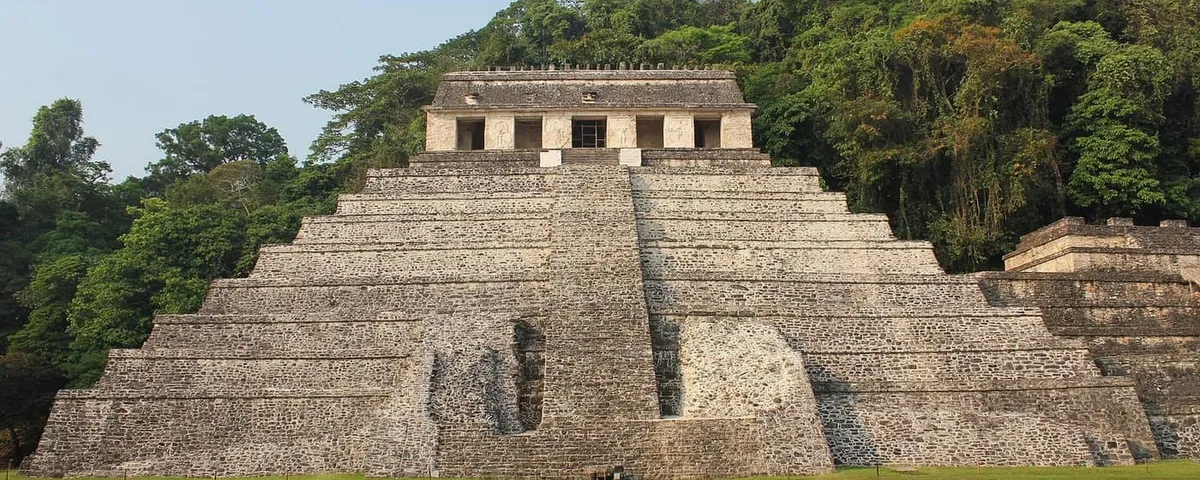
- The Palenque sarcophagus lid. The 7th-century tomb lid of the Maya king Pakal shows a man that von Däniken saw as a pilot at the controls of a rocket.
- The Dendera “lights”. Reliefs in the Hathor temple show lotus-and-snake motifs that some see as electric lamps; see out-of-place artefacts.
- The Saqqara Bird and the Abydos “helicopter”. A wooden bird model and a hieroglyph panel in the Temple of Seti I that look like aircraft.
- Ezekiel’s wheels. The vision of Ezekiel 1, with its wheels within wheels, fire and a “firmament”, read as an eyewitness account of a landing craft.
- The vimanas. Flying palaces and chariots of the Indian epics, plus the Vaimānika Shāstra’s technical-looking descriptions of aircraft.
- Myths of sky beings. The Watchers and Nephilim of the Book of Enoch, the Anunnaki and the Oannes fish-men of Babylon, and teachers from the sky in many founding legends.
- Elongated skulls. These are taken as imitations of, or evidence for, a non-human elite.
- Dogon astronomy. The Dogon reportedly knew Sirius had a dense companion.
Supporters argue that the pattern matters more than any single item: similar sky-god stories, similar monument types and similar “gifts of civilisation” appear on several continents, and the simplest explanation, in their view, is a common outside source.
Who champions it
- Erich von Däniken. The founder of the modern genre, with dozens of books, decades of lecture tours and many appearances on Ancient Aliens.
- Giorgio A. Tsoukalos. Publisher of Legendary Times magazine and the best-known face of Ancient Aliens. He argues that ancient texts should be read more literally, as descriptions of real events.
- Zecharia Sitchin (1920–2010) and his Anunnaki readings of Mesopotamian texts, which remain influential through later authors.
- David Hatcher Childress, publisher and author on ancient technology, and Mauro Biglino, an Italian translator who reads the Hebrew Bible’s Elohim as physical visitors rather than God.
- Jaime Maussan. The Mexican journalist who presented the Nazca “tridactyl” bodies to the Mexican Congress in 2023 as possible non-human beings.
Other researchers on this site, such as Graham Hancock, are often grouped with the ancient-astronaut camp by critics. Hancock’s lost civilisation, however, is a human one, not a visiting one.
The mainstream view, in fair depth
Archaeologists, historians and astronomers argue that every example has a better-documented human explanation. They also say the theory underestimates ancient peoples:
- Context. The Palenque lid is a well-understood Maya image of Pakal falling into the underworld or rising along the world tree, with glyphs that name him. The Dendera reliefs carry captions describing a mythological lotus and snake. The Abydos “helicopter” is a palimpsest: the titles of Ramesses II were carved over those of his father Seti I, and where the plaster filling the older signs fell away, the two overlapping inscriptions produced shapes that look like machines.
- Objects in context. The Saqqara Bird was found in 1898 in the tomb of Pa-di-Imen, is made of sycamore wood, dates to around 200 BCE and is about 18 cm across. Its purpose is unknown, but it is not capable of flight, and Egyptologists read it as a carved bird figure, perhaps a toy.
- Achievable engineering. Experimental archaeology shows how people moved blocks, cut stone and laid out lines. Nazca lines can be reproduced with stakes and cord. Archaeologist Alexei Vranich used 3D-printed models of Pumapunku’s scattered blocks to show that they fit together as a standardised, modular building system: a sign of careful human planning. See the Nazca and Puma Punku guides.
- Texts read closely. Assyriologists and Semitic-language scholars such as Michael Heiser have shown that Sitchin’s key translations do not match the ancient Akkadian bilingual word lists, and that nothing in Mesopotamian texts describes a planet Nibiru on a 3,600-year orbit. A 1974 study by engineers at the Indian Institute of Science in Bangalore found the aircraft in the Vaimānika Shāstra to be “poor concoctions”, and the text itself only surfaced in the 20th century.
- Myths are human. Sky gods appear in every culture as a natural way to express power and the heavens. Similar stories can arise independently because people everywhere watch the same sky and face the same floods, droughts and wars.
- Dogon contamination. Anthropologist Walter van Beek found no Sirius B knowledge among the Dogon in later fieldwork. The original reports may reflect contact with Europeans.
- The implicit bias objection. Critics note the theory is most often applied to non-European cultures, such as Egypt, the Maya, the Andes and Africa, which implies that those peoples needed help. Many proponents reject that reading and say they admire ancient builders.
Carl Sagan summed up the mainstream position: the cases of apparent interest have ordinary explanations, have been misreported, or are hoaxes. But he also kept the door open: he thought extraterrestrial visits were possible, just unproven and improbable.
Current state of research and debate
- Mainstream science does take extraterrestrial life seriously, through SETI and astrobiology, and has looked for “technosignatures”. Physicists Paul Davies and Robert Wagner proposed scanning the high-resolution images of the Lunar Reconnaissance Orbiter for traces of alien artefacts on the Moon. No physical artefact of non-human origin has been verified.
- In 2018 Gavin Schmidt (NASA) and Adam Frank published the “Silurian hypothesis”: if an industrial civilisation had existed millions of years ago, what traces would survive? Their answer was that direct artefacts would probably be gone, but chemical and isotopic signals in sediments might not be. The paper is about a possible earlier Earth civilisation, not visitors, but it shows that scientists can frame testable questions about deep-time technology.
- Archaeology keeps finding more, not less, at the classic sites. An AI-assisted survey of the Nazca Pampa, published in 2024, found 303 new figurative geoglyphs in six months, nearly doubling the known total. Most of the small relief-type figures show humans, domesticated animals or decapitated heads and lie within about 43 m of ancient trails, which points to a ritual landscape made and walked by people.
- Since 2017, interest in UAPs (see non-human intelligence) and the Mexican congressional hearings on the Nazca “tridactyl” bodies have renewed the ancient-astronaut debate.
- A 2019 report in Science noted that belief in ancient aliens and Atlantis was rising, and archaeologists have since engaged more directly with the public on social media and podcasts.
- New discoveries, such as lidar cities and the discovery feed, keep showing that ancient cultures were more capable than once assumed. Proponents and critics both read that as support for their view.
Open questions
- What would count as decisive evidence, such as an artefact with unearthly isotope ratios or manufacture?
- Why are some myths so similar across cultures, and how much of that similarity survives once later contact and translation are accounted for?
- Could a visit thousands of years ago leave any trace we could still detect, and where would be the best place to look?
- How should open-minded inquiry and respect for the descendants of ancient builders be balanced?
Further reading & watching
- Erich von Däniken, Chariots of the Gods? (1968). Zecharia Sitchin, The 12th Planet (1976). Robert Temple, The Sirius Mystery (1976). Josef F. Blumrich, The Spaceships of Ezekiel (1974).
- Ancient Aliens (History, 2009–) and Tsoukalos’s Legendary Times.
- For the mainstream view: Kenneth Feder, Frauds, Myths, and Mysteries; Carl Sagan, Broca’s Brain (1979); Jason Colavito, The Cult of Alien Gods (2005).
- On this site: non-human intelligence, Nazca tridactyl mummies, out-of-place artefacts and elongated skulls.
- Tours: Nazca & Paracas, Puma Punku, Giza.
Sources
- Ancient astronauts (Wikipedia, with references). https://en.wikipedia.org/wiki/Ancient_astronauts
- Chariots of the Gods? (Wikipedia). https://en.wikipedia.org/wiki/Chariots_of_the_Gods%3F
- Ancient Aliens (Wikipedia). https://en.wikipedia.org/wiki/Ancient_Aliens
- Zecharia Sitchin (Wikipedia). https://en.wikipedia.org/wiki/Zecharia_Sitchin
- Temple of the Inscriptions / Pakal’s sarcophagus (Wikipedia). https://en.wikipedia.org/wiki/Palenque_sarcophagus
- Dendera light (Wikipedia). https://en.wikipedia.org/wiki/Dendera_light
- Legendary Times (Giorgio A. Tsoukalos). https://www.legendarytimes.com/
- Helicopter hieroglyphs (Wikipedia). https://en.wikipedia.org/wiki/Helicopter_hieroglyphs
- Saqqara Bird (Wikipedia). https://en.wikipedia.org/wiki/Saqqara_Bird
- Vaimānika Shāstra, incl. the 1974 Indian Institute of Science study (Wikipedia). https://en.wikipedia.org/wiki/Vaim%C4%81nika_Sh%C4%81stra
- The Spaceships of Ezekiel / Josef F. Blumrich (Wikipedia). https://en.wikipedia.org/wiki/Josef_F._Blumrich
- Jungfrau Park (formerly Mystery Park) (Wikipedia). https://en.wikipedia.org/wiki/Jungfrau_Park
- Michael S. Heiser, Sitchin Is Wrong. https://sitchiniswrong.com/
- van Beek, W. E. A. (1991). Dogon restudied: a field evaluation of the work of Marcel Griaule. Current Anthropology 32: 139–167. https://doi.org/10.1086/203932
- Vranich, A. (2018). Reconstructing ancient architecture at Tiwanaku, Bolivia: the potential and promise of 3D printing. Heritage Science 6: 65. https://doi.org/10.1186/s40494-018-0231-0
- Sakai, M. et al. (2024). AI-accelerated Nazca survey nearly doubles the number of known figurative geoglyphs and sheds light on their purpose. PNAS 121. https://doi.org/10.1073/pnas.2407652121
- Davies, P. & Wagner, R. V. (2013). Searching for alien artifacts on the moon. Acta Astronautica 89: 261–265. https://doi.org/10.1016/j.actaastro.2011.10.022
- Schmidt, G. A. & Frank, A. (2019). The Silurian hypothesis: would it be possible to detect an industrial civilization in the geological record? International Journal of Astrobiology 18: 142–150. https://doi.org/10.1017/S1473550418000095
- Wade, L. (2019). Beliefs in aliens, Atlantis are on the rise. Science 364: 110–111. https://doi.org/10.1126/science.364.6436.110
- Mauro Biglino (Wikipedia). https://en.wikipedia.org/wiki/Mauro_Biglino