The idea in brief
About 12,900 years ago, just as the world was warming out of the last Ice Age, the Northern Hemisphere suddenly fell back into near-glacial cold. This cold snap, called the Younger Dryas after the Arctic flower Dryas octopetala whose pollen shows up in lake sediments from the period, lasted roughly 1,200 years. It ended just as suddenly around 11,700 years ago, which marks the start of the Holocene, the warm period we still live in.
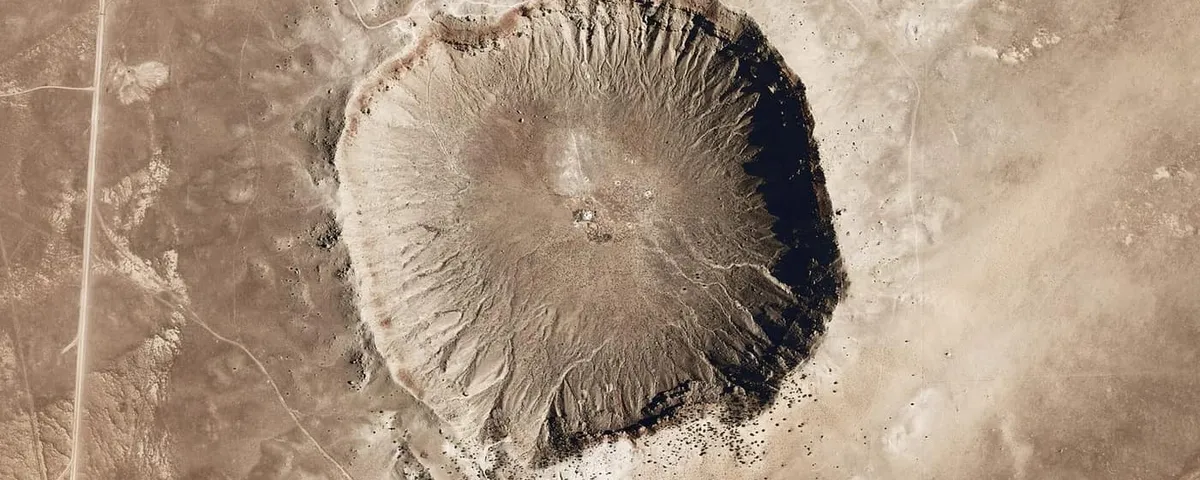
The Younger Dryas Impact Hypothesis (YDIH) proposes that the cooling was triggered by a cosmic event. In this view, fragments of a large comet hit or exploded in the air over North America, Greenland and Europe. The impacts are said to have:
- set off continent-wide wildfires,
- sent huge pulses of meltwater into the oceans,
- disrupted ocean circulation,
- contributed to the extinction of mammoths, mastodons, giant ground sloths and other megafauna,
- and coincided with the decline of the Clovis culture in North America.
For the alternative-history community the hypothesis matters for another reason. It offers a physical mechanism for the global cataclysm that, in Graham Hancock’s view, could have wiped out an advanced Ice Age civilisation (see A Lost Ice Age Civilisation). That is why the YDIH sits at the centre of so many books, podcasts and tours.
History of the idea
The Younger Dryas itself is not controversial. Its existence and timing are well established from Greenland ice cores, lake sediments, tree rings and pollen records. What has long been debated is why it happened.
From the late 1980s the leading explanation was a sudden outflow of glacial meltwater. In 1989, Wallace Broecker and colleagues argued in Nature that water from the vast glacial Lake Agassiz in North America was rerouted east into the North Atlantic. This freshened the surface water and slowed the Atlantic Meridional Overturning Circulation, the ocean “conveyor” that carries tropical heat north. This meltwater model, with many later refinements, is still the mainstream explanation.
The impact idea entered the scientific literature in 2007, when Richard Firestone, Allen West and some two dozen co-authors published “Evidence for an extraterrestrial impact 12,900 years ago that contributed to the megafaunal extinctions and the Younger Dryas cooling” in the Proceedings of the National Academy of Sciences. They reported a thin layer at the base of the Younger Dryas, often found just below a dark, organic-rich “black mat”, at sites across North America. The layer was said to contain:
- magnetic grains and microspherules,
- carbon spherules,
- glass-like carbon,
- nanodiamonds,
- elevated iridium.
They interpreted these as impact markers.
The researchers went on to form the Comet Research Group, which has published dozens of follow-up papers. The idea reached a mass audience through Graham Hancock’s Magicians of the Gods (2015) and the long-form podcast appearances of Hancock and Randall Carlson. Their joint podcast appearances introduced millions of listeners to the debate.
Key evidence cited by proponents
Supporters point to a growing list of lines of evidence:
- The YDB layer. Firestone et al. (2007) and later studies report spikes in microspherules, nanodiamonds and other proxies at the Younger Dryas Boundary (YDB) at dozens of sites on four continents. The sites include Murray Springs in Arizona, Blackwater Draw in New Mexico, and sites in Europe and the Middle East.
- Platinum anomaly in Greenland ice. Petaev et al. (2013, PNAS) found a sharp platinum spike in the GISP2 ice core close to the start of the Younger Dryas. Platinum is enriched in some meteoritic material.
- Biomass burning. Wolbach et al. (2018, Journal of Geology) compiled ice-core, lake and marine records and argued for an episode of extensive wildfires at the YDB, possibly affecting around 10% of Earth’s land surface.
- Abu Hureyra, Syria. Moore et al. (2020, Scientific Reports) reported high-temperature meltglass and nanodiamonds in the Younger Dryas layer of this early village on the Euphrates. They argued it was hit by an airburst while people lived there. Abu Hureyra is also one of the earliest sites with evidence of cultivated cereals.
- The Channeled Scablands. Carlson has spent decades studying the huge flood landscapes of eastern Washington State. Geologist J Harlen Bretz first explained them in the 1920s as the result of catastrophic glacial outburst floods. Carlson argues that a cosmic trigger best explains the scale and timing of late-glacial flooding.
- Göbekli Tepe. Martin Sweatman and Dimitrios Tsikritsis (2017) interpreted Pillar 43, the “Vulture Stone”, as a sky map recording a comet swarm around 10,950 BCE. See the Göbekli Tepe guide.
- Myth. Proponents note that flood, fire-from-the-sky and “winter of the world” motifs appear in mythologies worldwide. Hancock suggests they preserve memories of the event.
Who champions it
- Graham Hancock made the YDIH the scientific backbone of Magicians of the Gods and Netflix’s Ancient Apocalypse.
- Randall Carlson focuses on geomorphology, Ice Age floods and cycles of catastrophe. He co-founded the Cosmic Summit events.
- Andrew Collins links the event to Göbekli Tepe and to the Cygnus constellation.
- Robert Schoch argues for a related but different trigger, a solar outburst, as the cause of end-of-Ice-Age catastrophe.
- Among academic scientists, the Comet Research Group carries on the published case. Members include physicist Richard Firestone, geologist James Kennett and archaeologist Andrew Moore.
The mainstream view, in fair depth
Most Quaternary geologists, palaeoclimatologists and archaeologists do not accept the hypothesis. Their main objections are:
- Reproducibility of the markers. Several independent teams tried to replicate the original measurements and found no consistent spikes in magnetic grains, spherules or iridium at the stated horizons. Others found such particles at many levels, not only at the boundary. Surovell et al. (2009, PNAS) is an early example.
- Dating. Critics argue that many YDB sites are not securely dated to 12,800–12,900 years ago. A layer that is rich in markers but not demonstrably synchronous cannot record a single event.
- Alternative origins for the markers. Microspherules form through ordinary processes, including volcanism and lightning. Some are also cosmic dust that rains down continually and builds up wherever sedimentation slows. The original “nanodiamonds” were disputed as misidentified graphene or graphite-like carbon.
- No crater. No impact structure of the right age and size has been identified. The 31-km Hiawatha crater under the Greenland ice sheet was briefly proposed as a candidate. In 2022 it was dated to about 58 million years ago (Kenny et al., Science Advances), which rules it out.
- The meltwater alternative works. The Younger Dryas is one of a series of abrupt climate swings during the last glacial period. These Dansgaard–Oeschger and Heinrich events are explained by ocean–ice interactions without impacts. In this view, the Younger Dryas needs no unique cause.
- Megafauna and Clovis. Extinctions in the Americas appear to be staggered rather than instantaneous. Many archaeologists see changes in the Clovis toolkit as cultural evolution rather than population collapse.
A 2011 review by Pinter and colleagues in Earth-Science Reviews was pointedly titled “The Younger Dryas impact hypothesis: A requiem.” In 2023, Vance Holliday and 13 co-authors published a 70-page “comprehensive refutation” in the same journal. They went through each proxy and site and concluded that the hypothesis is not supported.
Current state of research
The debate is still live in the peer-reviewed literature, which sets the YDIH apart from many alternative ideas. The Comet Research Group continues to publish site studies, meltglass analyses and modelling of airbursts. Critics continue to publish rebuttals.
Some points are now broadly agreed by both sides:
- the Younger Dryas cooling itself is real and abrupt;
- there was significant biomass burning at some point around the transition;
- the platinum anomaly in Greenland exists, though its source is debated;
- airbursts, explosions of cosmic bodies in the atmosphere without a crater, are physically realistic. The 1908 Tunguska event and the 2013 Chelyabinsk meteor are cited.
What remains disputed is whether these strands add up to one synchronous, hemisphere-wide impact event, and whether that event caused the cooling and extinctions.
Related 2020s research has also raised public interest. A 2021 Scientific Reports paper argued for an airburst destroying the Bronze Age city of Tall el-Hammam in Jordan. It is not about the Younger Dryas, but it involved several of the same authors. It drew sharp criticism and a published correction, and is often cited by both camps as a test case.
Open questions
- Can independent laboratories, working blind, reproduce a synchronous marker layer at the same securely dated horizon at many sites?
- If there was an impact or airburst swarm, where did the material land, and why is there no crater?
- How much of the Younger Dryas cooling can meltwater models explain on their own, given recent better-dated records of Lake Agassiz drainage routes?
- Did any human communities, such as those at Abu Hureyra or the builders of Göbekli Tepe, experience the event directly? Is there archaeological evidence of disruption at exactly that moment?
- Do worldwide myths of fire and flood really preserve memories that are 12,000 years old? How could that be tested?
Further reading & watching
- Graham Hancock, Magicians of the Gods (2015). The popular case.
- Richard Firestone, Allen West & Simon Warwick-Smith, The Cycle of Cosmic Catastrophes (2006). The founding proponents’ book.
- Martin Sweatman, Prehistory Decoded (2019). Göbekli Tepe and the comet.
- Randall Carlson’s Kosmographia podcast; see Voices.
- Holliday et al. (2023). The most complete critical review.
- Visit the sites: tours to Göbekli Tepe and the tour directory.
Sources
- Firestone, R. B. et al. (2007). Evidence for an extraterrestrial impact 12,900 years ago… PNAS 104(41). https://doi.org/10.1073/pnas.0706977104
- Broecker, W. S. et al. (1989). Routing of meltwater from the Laurentide Ice Sheet during the Younger Dryas cold episode. Nature 341. https://doi.org/10.1038/341318a0
- Petaev, M. I. et al. (2013). Large Pt anomaly in the Greenland ice core points to a cataclysm at the onset of Younger Dryas. PNAS 110(32). https://doi.org/10.1073/pnas.1303924110
- Wolbach, W. S. et al. (2018). Extraordinary biomass-burning episode and impact winter triggered by the Younger Dryas cosmic impact ~12,800 years ago. Journal of Geology 126(2). https://doi.org/10.1086/695703
- Moore, A. M. T. et al. (2020). Evidence of cosmic impact at Abu Hureyra, Syria at the Younger Dryas onset. Scientific Reports 10. https://doi.org/10.1038/s41598-020-60867-w
- Pinter, N. et al. (2011). The Younger Dryas impact hypothesis: A requiem. Earth-Science Reviews 106. https://doi.org/10.1016/j.earscirev.2011.02.005
- Holliday, V. T. et al. (2023). Comprehensive refutation of the Younger Dryas Impact Hypothesis (YDIH). Earth-Science Reviews 247. https://doi.org/10.1016/j.earscirev.2023.104502
- Kenny, G. G. et al. (2022). A Late Paleocene age for Greenland’s Hiawatha impact structure. Science Advances 8. https://doi.org/10.1126/sciadv.abm2434
- Surovell, T. A. et al. (2009). An independent evaluation of the Younger Dryas extraterrestrial impact hypothesis. PNAS 106(43). https://doi.org/10.1073/pnas.0907857106
- Sweatman, M. B. & Tsikritsis, D. (2017). Decoding Göbekli Tepe with archaeoastronomy. Mediterranean Archaeology and Archaeometry 17(1).