Some alternative writers propose that buried moai bodies and the rongorongo script hint at an older lost culture.
The mainstream view
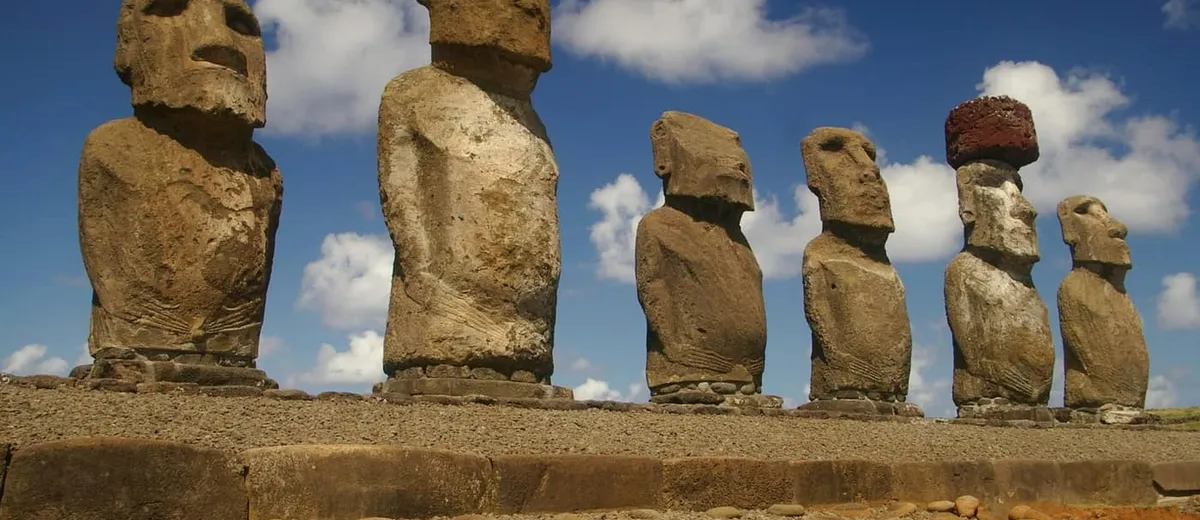
Radiocarbon work places settlement c. 1150–1300 CE; experiments by Hunt & Lipo (2013) showed moai could be "walked" upright with ropes, matching oral tradition.
We present both views respectfully and link to the original work so you can judge for yourself.
Whole-genome sequences from across Polynesia show some of the strongest founder effects known in any population. Hawaiʻi and Rapa Nui are among the most bottlenecked and, despite their distance, are each other’s closest relatives, likely settled by the same voyagers with roots in Mangareva.
Carl Lipo and Terry Hunt combined 3D models of road moai and rope-rocking experiments. They argue the statues were “walked” upright along concave roads, matching oral tradition.
Independent researcher known for mapping a great-circle alignment linking Giza, Nazca, Easter Island and Angkor. His site documents the geometry behind his global-alignment hypothesis.
Creator of the Megalithic Marvels and Stargate Voyager series, comparing megalithic construction and symbolism across cultures. He hosts tours to Egypt, Peru, Easter Island and Cambodia.